UGC stands for “User-Generated Content” – any content created by real customers, fans, or users rather than brands themselves. This includes photos, videos, reviews, social media posts, testimonials, blog posts, and other authentic content that showcases genuine experiences with products or services. In today’s marketing landscape, where 92% of consumers prefer authenticity over polished advertisements, UGC has become the cornerstone of building trust and driving conversions.
Understanding User-Generated Content (UGC)
User-generated content represents a fundamental shift from traditional marketing where brands controlled their messaging. Instead of professionally crafted advertisements, UGC encompasses authentic, unfiltered content created by everyday people who use and love your products. This transformation has democratized content creation, turning consumers from passive spectators into active brand advocates.
What makes content truly “user-generated” requires three key elements: it must be publicly accessible through digital platforms, involve creative effort from the user rather than simple copying, and be created outside professional routines without expectation of direct compensation. This organic nature is precisely what makes UGC so powerful – it represents genuine experiences and opinions that resonate with potential customers.
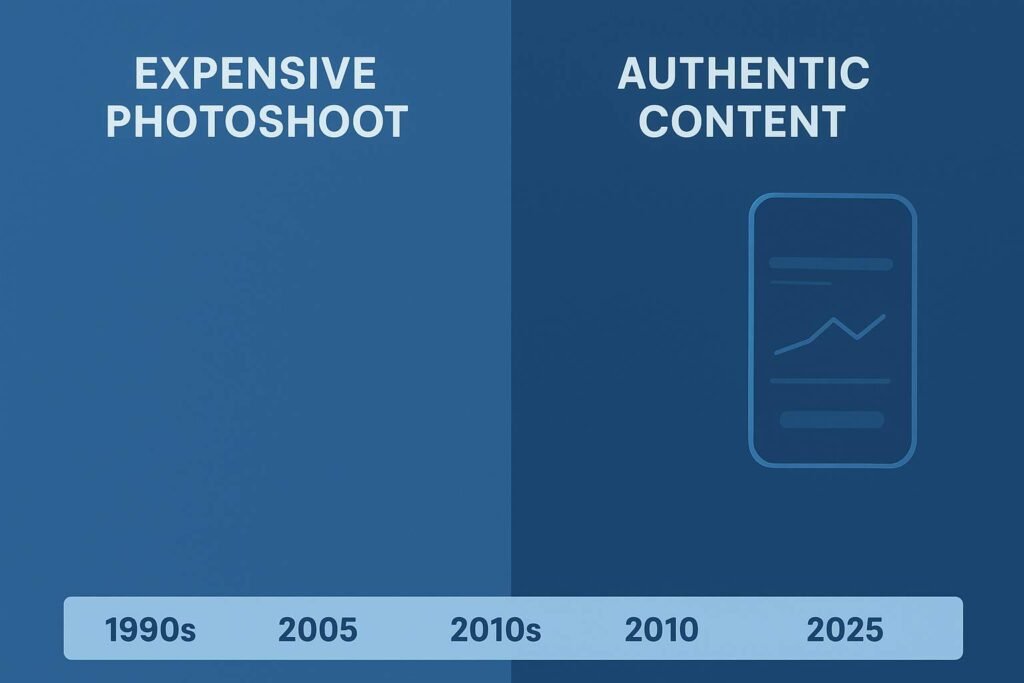
The evolution of UGC marketing began in the 1990s when brands started using customer feedback to understand their audiences better. However, the real breakthrough came around 2005 with the rise of social media platforms. By 2006, Time magazine recognized this shift by naming “You” as Person of the Year, acknowledging how ordinary people had become content creators.
Types of User-Generated Content
User-generated content manifests in numerous formats across different platforms, each serving unique purposes in marketing strategies.
Social Media Content
Social media remains the primary battleground for UGC campaigns. This includes:
- Posts and captions that share customer experiences and product stories
- Photos showcasing products in real-world settings, particularly popular on Instagram and Pinterest
- Videos ranging from unboxing experiences to creative product demonstrations on TikTok and YouTube
- Stories offering behind-the-scenes glimpses of customer experiences
Reviews and Testimonials
Customer reviews and testimonials serve as powerful social proof, with 79% of consumers saying UGC influences their purchasing decisions. These authentic endorsements provide potential customers with honest assessments of product quality, performance, and value.
Visual Content
User-generated visual content cuts through the noise of perfectly staged photography. Real customers showcase products in authentic environments, demonstrating actual fit, functionality, and styling options. This authenticity is particularly valuable for industries like fashion and footwear, where seeing products on real people helps eliminate purchase hesitations.
Community-Driven Content
Forums, discussion boards, blogs, and podcasts created by users foster deeper engagement and community building. These platforms allow customers to share detailed experiences, ask questions, and provide peer-to-peer support.
Table: UGC Content Types and Their Primary Benefits
| Content Type | Primary Platform | Key Benefit | Engagement Impact |
|---|---|---|---|
| Photos | Instagram, Pinterest | Visual social proof | 12% higher engagement than brand content |
| Videos | TikTok, YouTube | Product demonstrations | 38% higher engagement rates |
| Reviews | E-commerce sites | Purchase confidence | 73% increase in buying confidence |
| Stories | Instagram, Snapchat | Behind-the-scenes authenticity | 2-3x higher engagement |
Why UGC Matters: The Power of Authentic Marketing
Building Trust Through Authenticity
Trust is the foundation of successful marketing, and UGC delivers it in spades. When potential customers see real people sharing genuine experiences, it creates a level of credibility that traditional advertising simply cannot match. Unlike polished brand content, UGC shows products in actual use, addressing common concerns about fit, functionality, and value.
Research consistently demonstrates this trust advantage. Nielsen studies show that 88% of consumers trust recommendations from peers over traditional advertising. This trust translates directly into business results, with UGC campaigns generating 29% more web conversions than campaigns without authentic customer content.
Enhanced Engagement and Community Building
UGC transforms passive consumers into active brand participants. When customers create content about your brand, they become emotionally invested in your success. This participation fosters stronger relationships and creates organic conversations around your products and services.
The engagement benefits are measurable. Brands featuring UGC see engagement rates on social posts double or triple compared to brand-generated content. This increased engagement stems from the relatable nature of user-created content – people connect more readily with content from peers who share similar experiences and challenges.
Cost-Effective Content Strategy
UGC provides a sustainable solution to the constant demand for fresh marketing content. Instead of investing heavily in professional photography and video production, brands can curate authentic content created by their customers. This approach not only reduces costs but also provides a continuous stream of diverse, relevant content.
The economic advantages extend beyond content creation. UGC campaigns typically deliver higher ROI than traditional advertising because they combine authentic messaging with organic reach through customer networks.
The Business Impact of UGC: Statistics That Matter
The user-generated content market has experienced explosive growth, with the UGC market worth over $7.6 billion as of 2025, representing a 69% increase from $4.5 billion in 2024. This growth trajectory shows no signs of slowing, with projections indicating the market will surpass $27 billion by 2029.
Consumer behavior strongly supports this trend. 90% of consumers considered UGC the most influential purchase driver in 2024, while 85% of consumers relied on user-generated video before making a purchase. These statistics underscore how UGC has become integral to the modern customer journey.
Platform-Specific Performance
Different platforms excel at generating various types of UGC:
- YouTube generates the most UGC according to 28% of marketers, with content driving 12x more impressions and 17x more engagements than brand-owned content
- Instagram leads in discovery, with 48% of consumers discovering new products through UGC on social feeds
- TikTok dominates among UGC creators, with 54% using it as their primary platform
Demographic Insights
The UGC creator community has grown by 93% between 2024 and 2025, with female creators comprising 96% of the space. Most creators fall within the 25-34 age range (51%), followed by 18-24 (37%). Understanding these demographics helps brands tailor their UGC strategies to resonate with active content creators.
How Brands Successfully Use UGC
Successful UGC Campaign Examples
Coca-Cola’s “Share a Coke” campaign remains one of the most successful UGC initiatives ever executed. By personalizing bottles with popular names, Coca-Cola encouraged customers to share photos of their personalized bottles on social media using #ShareACoke. The campaign generated over 500,000 photos on Instagram alone and significantly boosted sales.
GoPro’s approach demonstrates how product-focused brands can leverage UGC effectively. The company’s Million Dollar Challenge encouraged customers to share their best GoPro videos, generating over 25,000 submissions. This strategy not only provided GoPro with authentic content showcasing their products in action but also demonstrated real-world use cases to potential customers.
Starbucks’ Red Cup Contest showcased creativity-driven UGC. The company provided plain red holiday cups and asked customers to create unique designs, photograph them, and share using #RedCupArt. The winning photos were featured on Starbucks’ website and social media accounts, creating buzz during the holiday season.
Strategic Implementation Approaches
Successful brands integrate UGC across multiple touchpoints throughout the customer journey. This includes:
- Product pages featuring customer photos and reviews to provide social proof at the point of decision
- Social media channels regularly showcasing user content to maintain authentic brand presence
- Email marketing campaigns incorporating customer stories and testimonials
- In-store displays bringing digital UGC into physical retail environments
Creating Your UGC Strategy: A Step-by-Step Guide
Step 1: Define Your Goals and Objectives
Before launching any UGC campaign, establish clear, measurable objectives. Rather than vague goals like “increase brand awareness,” be specific: “increase brand recognition by 15% among Gen Z consumers in the next quarter”. Clear goals help determine the type of content you need and the success metrics you’ll track.
Common UGC campaign objectives include:
- Spreading brand awareness through authentic customer stories
- Collecting product feedback and testimonials
- Launching new features or products with real customer demonstrations
- Building community engagement and loyalty
Step 2: Understand Your Audience
Conduct thorough research to understand your target audience’s demographics, preferences, and online behaviors. Analyze where your audience spends time online, what type of content they engage with, and what motivates them to share experiences.
Create detailed customer personas to guide your campaign development. For example, if your primary audience consists of environmentally conscious millennials, focus on encouraging them to share how they incorporate your sustainable products into their daily lives.
Step 3: Choose the Right Platforms
Different social media platforms support different types of content and UGC campaigns:
- Instagram: High-resolution photos, stories, and lifestyle content
- TikTok: Short-form videos and viral challenges
- YouTube: Long-form video content and tutorials
- Facebook: Community discussions and curated content
- Pinterest: Step-by-step guides and inspirational content
Select platforms based on where your audience is most active and which formats align with your campaign goals.
Step 4: Create Compelling Campaign Concepts
Develop creative concepts that are engaging, relatable, and aligned with your brand values. Consider various formats such as:
- Photo contests encouraging customers to showcase products creatively
- Hashtag challenges that invite participation and build community
- Storytelling prompts where customers share memorable experiences with your brand
- Before/after transformations demonstrating product effectiveness
Your campaign should include a unique, memorable hashtag that participants can use to share their content, making it easy to aggregate submissions and increase visibility.
Step 5: Establish Clear Guidelines
Provide participants with clear, concise submission guidelines. This includes:
- Required hashtags and account tags
- Submission deadlines and formats
- Content quality expectations
- Prize information or incentives
- Usage rights and permissions
Clear guidelines streamline the submission process and set appropriate expectations for participants.
Step 6: Launch and Promote Your Campaign
Develop a comprehensive promotion strategy to maximize reach and participation. Utilize multiple channels:
- Social media announcements with eye-catching visuals
- Email newsletter campaigns to existing customers
- Influencer partnerships for extended reach
- Paid advertising to target specific demographics
Consider collaborating with micro-influencers or brand ambassadors who can encourage their followers to participate while lending credibility to your campaign.
Image Prompt: Campaign launch flowchart showing multi-channel promotion strategy with social media, email, influencers, and paid ads connecting to target audience.
UGC Best Practices and Ethical Considerations
Content Rights and Permissions
Always obtain explicit permission before using customer content in marketing materials. This typically involves:
- Requiring users to agree to terms when submitting content
- Requesting written consent for social media reposts
- Clearly stating how submitted content will be used
- Respecting creators’ intellectual property rights
Transparency and Disclosure
Maintain transparency in all UGC campaigns. If content is incentivized or created through influencer partnerships, comply with regulations requiring clear disclosure. This builds trust with your audience and ensures legal compliance.
Quality Control and Moderation
Establish systems for moderating UGC to maintain brand reputation. This includes:
- Manual review processes for submission approval
- AI-based moderation tools for large-scale campaigns
- Clear community guidelines for acceptable content
- Consistent quality standards that align with brand values
Privacy Protection and Data Security
Protect user privacy throughout the UGC collection process. Avoid requesting personally identifiable information without explicit consent, and ensure any collected data complies with privacy regulations like GDPR and CCPA.
Measuring UGC Success: Key Performance Indicators
Engagement Metrics
Track engagement rates across different content types and platforms. UGC typically generates 38% higher engagement rates than brand-created content, making engagement a crucial success indicator.
Key engagement metrics include:
- Likes, comments, and shares on UGC posts
- Click-through rates on content featuring UGC
- Time spent viewing UGC content
- User participation rates in campaigns
Conversion and Sales Impact
Monitor how UGC influences purchasing behavior. Brands using UGC see 29% more web conversions, making conversion tracking essential for measuring ROI.
Track:
- Conversion rates on product pages featuring UGC
- Sales attributed to UGC campaigns
- Customer acquisition costs for UGC-driven campaigns
- Average order value from UGC-influenced purchases
Brand Sentiment and Awareness
Measure how UGC impacts brand perception and recognition. Use social listening tools to monitor:
- Brand mention sentiment across social platforms
- Share of voice compared to competitors
- Hashtag performance and reach
- Community growth and engagement quality
Table: UGC Success Metrics by Campaign Goal
| Campaign Goal | Primary KPI | Secondary Metrics | Success Benchmark |
|---|---|---|---|
| Brand Awareness | Reach and impressions | Hashtag usage, mentions | 25% increase in brand searches |
| Customer Engagement | Engagement rate | Comments quality, shares | 2-3x higher than brand content |
| Sales Conversion | Conversion rate | Cart abandonment, AOV | 29% improvement over non-UGC campaigns |
| Community Building | Participation rate | Repeat contributors, advocacy | 15% increase in loyal customers |
The Future of User-Generated Content
Emerging Trends and Technologies
The UGC landscape continues evolving with new technologies and consumer behaviors. Artificial intelligence is beginning to play a role in UGC curation and optimization, helping brands identify the most effective content for their audiences.
Live streaming and real-time content creation are gaining prominence, with platforms like Instagram Live and TikTok Live enabling immediate, authentic interactions between brands and customers. This trend toward real-time engagement reflects consumers’ growing desire for genuine, unfiltered brand experiences.
Platform Evolution
Social media platforms continue developing new features specifically designed to enhance UGC campaigns. Instagram’s shopping tags, TikTok’s branded effects, and YouTube’s Community posts all provide new opportunities for brands to integrate UGC into their marketing strategies.
The rise of short-form video content shows no signs of slowing, with platforms like TikTok, Instagram Reels, and YouTube Shorts driving higher engagement rates for UGC than traditional long-form content.
Industry Adoption
By 2033, experts predict that 78% of all online content will be user-generated. This massive shift indicates that brands must adapt their strategies to compete effectively in an increasingly UGC-dominated digital landscape.
Companies across all industries are recognizing UGC’s power, with 56% of brands focusing exclusively on using UGC on social platforms in 2024. This focus is expected to intensify as more brands realize the authentic connection and cost-effectiveness that UGC provides.
Conclusion: Embracing the UGC Revolution
User-generated content represents more than just a marketing tactic – it’s a fundamental shift toward authentic, community-driven brand building. As consumers increasingly reject traditional advertising in favor of genuine peer recommendations, UGC provides the authenticity and trust that modern marketing demands.
The statistics speak clearly: 92% of consumers prefer UGC over traditional advertising, and brands implementing UGC strategies see 29% more conversions. With the UGC market projected to reach $27 billion by 2029, businesses that fail to embrace this trend risk falling behind competitors who understand the power of authentic customer voices.
Success with UGC requires more than simply asking customers to create content. It demands strategic planning, clear communication, ethical practices, and consistent measurement. Brands must create environments where customers feel valued and motivated to share their experiences while ensuring that UGC initiatives align with broader marketing objectives and brand values.
As we look toward the future, UGC will continue playing an increasingly central role in marketing strategies across all industries. The brands that succeed will be those that genuinely embrace their customers as partners in storytelling, creating authentic connections that drive both engagement and business results.
Whether you’re just beginning to explore UGC or looking to optimize existing campaigns, remember that the most powerful user-generated content comes from genuine customer satisfaction and brand loyalty. Focus on creating exceptional experiences, and the authentic content will follow naturally – along with the trust, engagement, and conversions that make UGC such a valuable marketing strategy.
For more insights on building comprehensive marketing strategies that incorporate authentic customer voices, explore our guide on B2B Content Marketing Strategies.
Ready to harness the power of user-generated content for your brand? Start by identifying one area of your business where customer stories could make the biggest impact, then develop a simple campaign concept that encourages authentic sharing. Remember, the best UGC campaigns begin with genuinely satisfied customers who are excited to share their experiences with others.